Lead Scoring
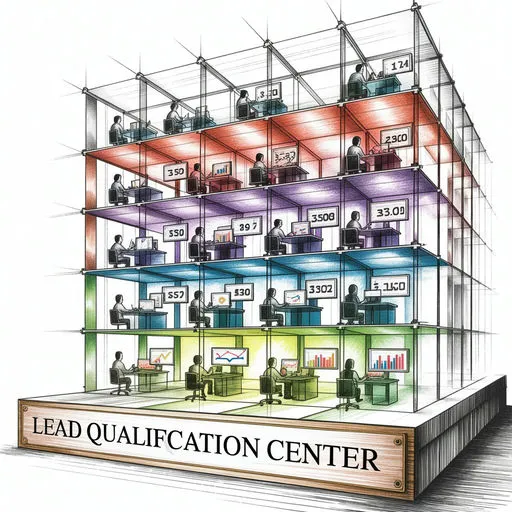
As your demand gen efforts start producing leads, you’ll likely face a new challenge: lead overload (and variability). Not every lead is equal – some are a perfect fit and ready to buy, others are curious tire-kickers, and many are in between. For a startup with limited sales capacity, prioritizing who to call or email first is crucial. Enter Lead Scoring: a method to quantitatively rank leads by their potential value or likelihood to convert, based on available data. A good lead scoring model helps your sales team focus on the leads that matter, improving efficiency and conversion rates.
Lead scoring typically combines three dimensions:
- Fit (who the lead is – do they match your ideal customer profile?),
- Intent (are they showing signs they want to buy?),
- Engagement (how much have they interacted with your marketing/content?).
Let’s break those down:
Fit
This is about the lead’s profile relative to your target. In B2B, this includes demographics (personal attributes like job title, role, seniority) and firmographics (company attributes like industry, size, location). For example, if you sell to enterprise CFOs, then a lead who is a “CFO at a Fortune 500 company” is a great fit, whereas a “Junior Marketing Associate at a small startup” is a poor fit. Fit scoring answers: Is this the type of company and person that could buy our product?
Attributes you might score: - Job title/Role: target roles get higher points (e.g. +10 if title contains “VP” or “Chief” or a specific relevant role). - Seniority: a decision-maker vs an intern. - Department/Function: if you only sell to finance departments, then leads from finance get more points. - Company size (employees or revenue): you might tier this (e.g. 500-5000 employees is sweet spot, +10; >5000 is +5 maybe; <100 is -5 if you think they’re too small). - Industry: perhaps some industries are ideal (+5) and some you don’t serve well (-5). - Location: if you only sell in North America, a lead from Europe might be lower score (or marked for a different nurturing path).
Fit data can come from form fields (you asked company size, industry on a form), from enrichment tools (e.g. Clearbit filling in company info), or from manual research. Modern marketing automation and CRM platforms let you set up scoring rules for these attributes easily. The idea is to weed out contacts that are unlikely to ever become customers – either don’t spend sales time on them or nurture them differently.
Intent
Intent is about actions that indicate the person has a buying interest. Some intent signals come from their direct interactions with you, others can come from third-party data: - On-site behavior: e.g. visiting your pricing page is a strong intent signal. Also requesting a demo or starting a trial is obviously high intent. Other signals: looking at the “Pricing” or “Contact Us” pages repeatedly, or the careers page (maybe just job seeker though), or searching your knowledge base. - Product usage: if you have a freemium or trial, actions inside the product (like using a key feature) can indicate intent to upgrade. - Response to sales outreach: e.g. an inbound lead who actually responds to your follow-up email or picks up a call – that shows real interest. - Third-party intent data: nowadays, you can get data from providers like Bombora, ZoomInfo Intent, G2 Crowd, etc., that tell you if companies are researching certain topics (e.g. multiple people at Company X read content about “network security” in the last week, meaning Company X likely has intent to buy something in that area). If you integrate such intent data, a company surging on relevant keywords could boost score for any leads from that company. Also, if someone is actively comparing you on G2 or Capterra (some platforms share who’s viewing your profile), that’s a high intent sign. - Explicit intent: sometimes forms ask “Timeline to buy” and if they chose “<3 months” that’s a clear positive.
Intent scoring helps separate the window-shoppers from the serious buyers. For instance, you might score: +50 points if “Requested a demo” (that one action basically makes them an MQL immediately), +20 if “Visited pricing page >2 times in last week”, +10 if “Clicked a specific high-intent email link (like a trial sign-up link)”, etc. Third-party intent might be account-level, but if you tie leads to accounts, you could say “if account has high intent score, add +10 to any leads from that account”.
Engagement
Engagement is related to intent but is more about the degree of interaction with your content and communications. It’s often things like:
- Emails opened or clicked: If a lead opens every email you send and clicks through, they’re engaged. If they haven’t opened any in months, they’re cold.
- Content downloads: Each content piece they download or webinar they attend can add points. E.g. +5 for downloading a whitepaper, +10 for attending a webinar (which is a bigger time investment).
- Website visits: Frequency and recency. If someone keeps coming back to your site, that’s engagement. You might score like +1 point per website visit (maybe capped or decayed over time) and extra +5 for key pages as above. Many systems also allow for scoring based on website activity easily (this is what marketing automation excels at).
- Social engagement: If applicable, clicking on your social posts or interacting in community events you host could be tracked and scored (though this is harder to systematically capture unless you have specific tracking).
Engagement is useful to measure how warmed up a lead is. A lead might fit your ICP perfectly but isn’t engaged at all – maybe they downloaded one thing months ago and disappeared. Their score might be moderate due to fit, but since intent and engagement are low, you wouldn’t have sales chase them yet. Conversely, a lead might be slightly off-fit but super engaged (e.g. a consultant who’s not a buyer themselves but is consuming everything – maybe they influence a buyer?). You might nurture them differently (like ask if they want a partner program).
Combining into a Score
Typically, you set up a scoring model that adds and subtracts points for various signals in each category. For instance:
- Fit scoring (50 possible points): e.g. Title matches target +20, Company size ideal +15, Industry ideal +10, outside target persona -20, etc.
- Engagement scoring (50 points): e.g. Each email open +2, each click +5, attended webinar +10, website visit +1, visited pricing +10, etc., decayed over time (if actions were long ago, they lose value).
- Intent scoring (perhaps overlap with engagement on your own site, but also special big jumps): e.g. Demo request = set score to 100 (immediately sales-worthy), Trial sign-up +40, third-party intent surge +10, etc.
Some systems (like HubSpot) even separate two scores: one for Fit (they call it “Profile/fit score”) and one for Engagement (they call it “Behavior score”). Tracking these scores separately can be useful because a great fit lead who’s not engaged might just not be ready. This gives you the opportunity. to nurture them more until engagement picks up. And a highly engaged lead who’s a poor fit might still not be a good sales target (except maybe if they’re a consultant or student – then you filter out).
For simplicity, many startups start with one blended score. You might decide a threshold that makes a lead “MQL” (Marketing Qualified Lead) – say 60 out of 100 points. When a lead crosses that, you alert the sales team/SDR to follow up promptly. The scoring is often implemented in your CRM or marketing automation (e.g. in HubSpot you can create a custom score property with rules, in Marketo you have score fields, etc.).
Lead Scoring Best Practices
Initially, you’ll use assumptions to set point values. Over time, check the results. For example, do leads with score 70+ actually convert to opportunities at a much higher rate than those with score <50? If not, maybe your weights are off. If you have enough data, you could do a regression analysis to see which factors correlate with conversion (this is how predictive lead scoring works, often with AI). But early on, anecdotal feedback from sales helps: if sales says “we keep calling these so-called MQLs but 80% are students downloading our ebook”, then you might adjust scoring to penalize “gmail.com emails” or add + points for business email, etc.
Here are some additional best practices:
- Include negative scores (or score degradation): Not all actions are positive. If a lead does something that indicates bad fit, subtract points (e.g. Title = “Student” or Email = free email domain, could be -50). Also implement decay – e.g. if no engagement in 3 months, reduce their score gradually (many systems support time-decay scoring). One method: each week, subtract 1 point from engagement score for inactivity. This prevents old leads from sitting with high scores forever.
- Use scoring to automate actions: Besides telling sales who to call, you can use score to trigger marketing automation. For example, if a lead’s score hits 30 (engaged but not MQL yet), you might put them into a nurture track (we’ll discuss next) to try to bump them higher. If someone’s score drops (no activity), you might send a “re-engagement” campaign or downgrade their status.
- Sales and Marketing Alignment: Make sure your sales team agrees on what constitutes an MQL. Lead scoring helps formalize that. For instance, you define: “An MQL is a lead with score 60+, which typically means they are an ICP fit (score high on fit) and have shown intent (e.g. visited key pages or requested contact).” Sales should commit to promptly working any MQL – because marketing is saying “we’ve vetted these to a degree.” Conversely, marketing should avoid flooding sales with too many low-quality leads as MQLs; that erodes trust. It’s often better to have a tighter MQL definition initially (fewer, higher quality leads) so sales sees value. You can always loosen up if pipeline needs and capacity allow.
Example – Lead Scoring Scenario
Startup CloudTask sells a SaaS platform for IT task automation, targeting companies 100-1000 employees, ideally IT managers as buyers. They set up scoring: - Fit: Title contains “IT” or “DevOps” +15, Title contains “Director” or “Head” +10, Company size 100-1000 +15, >1000 +10, <50 -10 (too small likely), Industry = Tech +5 (they do well in tech companies first), Email is business domain +5, Email is generic (@gmail) -15. - Engagement: Website visit +1 each (max 10), Visited pricing page +10, Visited integration docs page +5 (shows deeper interest), Downloaded whitepaper +7, Attended webinar +10, Opened marketing email +2 each (max 10), Clicked marketing email +5 each (max 15). - Intent: Requested demo +50 (immediate MQL), Started free trial +50, Visited pricing >3 times +10 extra, Third-party intent (via Bombora) if their company surging on “IT automation” +5, Replied to an outbound email +20 (if using CRM to track that).
They decide MQL threshold = 60. Now: - Lead A: “IT Director at 500-person tech company”. Fit = 15+10+15+5+5 = 50 (nearly there on fit alone!). They downloaded a whitepaper (+7) and opened two emails (+4). Engagement = 11. Total ~61. Yes, they become MQL – sales calls them; even though they didn’t explicitly request demo, their profile is excellent and they engaged a bit. - Lead B: “Intern at 50-person marketing agency” with gmail address. Fit = Title (intern - no points, maybe even -), company size -10, generic email -15, total fit maybe -25. They visited the site 5 times, downloaded two whitepapers (7+7) and attended a webinar (+10). Engagement ~24, but fit -25, net score ~ -1. They won’t be passed to sales. Marketing might notice them and think perhaps that intern is just researching for knowledge, not a buyer – no sales follow-up needed. - Lead C: “DevOps Engineer at 300-person finance company”. Fit: Title has DevOps +15, not a Director (0), size +15, industry not specifically tech (0), business email +5 -> fit ~35. Engagement: visited site 3 times (+3), pricing page once (+10), clicked an email invite to webinar (+5). Engagement ~18. Intent: they also started a free trial (+50). That plus everything puts them way over threshold (in fact trial alone did). Sales will definitely follow up, perhaps with a technical specialist since the lead is an engineer (maybe not decision maker but a strong influencer – scoring doesn’t know their influence level, but trial start indicates a team evaluation happening).
This system isn’t perfect, but it’s a guide. Over a few months, CloudTask might find that many MQLs from certain segments never convert (say, finance companies with just engineers involved stall out). They might adjust approach: perhaps to consider an SQL (sales qualified lead) only when they’ve had a discovery call to confirm actual project and authority. But at least lead scoring got them prioritizing effectively: sales wasn’t wasting time on interns or tiny firms, they focused on likely buyers.
Predictive Lead Scoring
As an aside, some advanced tools use machine learning to create predictive scores using historical data. For instance, they crunch data on all past leads and see which turned into customers, identifying patterns (maybe certain job titles or behaviors strongly correlate). If you have thousands of data points, this can outperform manual scoring. HubSpot, for example, introduced an AI-driven scoring that separates fit vs engagement scores automatically based on data. Early on, you probably won’t have enough data for AI to be meaningful, so rule-based scoring is fine. But keep an eye as you grow – at some point, letting the data find non-intuitive patterns (e.g. maybe leads who use Yahoo email but download 3 whitepapers on AI turn out to be consultants who bring deals) could refine your scoring.
Implementing lead scoring is a hallmark of moving from ad-hoc startup selling to a more systematic data-driven marketing approach. It’s one of those “steady-state” processes Dave Kellogg refers to in marketing where you shift from just grabbing leads to really qualifying and tracking pipeline quality. Done right, it aligns marketing and sales, improves conversion rates (sales spends time where it counts), and can even highlight areas to improve (if many leads are scoring high on engagement but low on fit, maybe your targeting is off, or vice versa).
Lead Nurturing Sequences and Retargeting Loops
Even with great content, campaigns, and lead scoring, the reality in B2B is that most leads won’t be ready to buy immediately. Many will sit in your funnel for weeks or months, educating themselves, getting budget, or just waiting for the right timing (e.g. new fiscal year). This is where lead nurturing comes in. Lead nurturing is the process of building a relationship with prospects over time, keeping your company top-of-mind, and gradually guiding them toward a purchase. As one study cited, companies that excel at lead nurturing generate 50% more sales-ready leads at 33% lower cost[3] – it’s an ROI booster, not just a nice-to-have.
Lead nurturing typically employs automated email sequences (drip campaigns) and increasingly a multi-channel approach (including ads, social touches, etc.) to continually engage leads. The goal is to maximize conversion of leads to the next stage (MQL to SQL, or SQL to opportunity, etc.), and shorten the sales cycle by proactively addressing questions or objections before the sales call.
Let’s cover key components:
Automated Email Nurture Sequences
Email is the workhorse of B2B nurturing. When a lead comes in (say they downloaded a whitepaper), you don’t just send them one thank-you email; you can put them into an email sequence tailored to their interest. These sequences can be a series of 3-7 emails spaced out over days or weeks. Each email provides additional value or CTA to deepen engagement. For example:
- Welcome Email: Immediately after they engage (download/trial/signup), send a personalized welcome. Thank them for their interest, provide the promised resource, and maybe suggest another piece of content relevant to them (e.g. “Since you liked our Cloud Security whitepaper, you might also enjoy our webinar on Zero Trust basics.”). This sets the tone that you’re there to help, not just sell.
- Follow-Up Educational Email: A few days later, send more useful info. Maybe a blog roundup or a tip. Example: “Hi, just checking in – many of our readers who downloaded that guide also ask about implementation strategies, so we thought you’d find this case study interesting on how Company Y implemented it in 3 steps.”
- Intent-Trigger Email: If they haven’t taken the next step (like requested a demo), one email might more directly encourage it: “Ready to see X in action? Here’s a short video demo you can watch now, or click here to schedule a personalized walkthrough.” Include benefits and social proof.
- Overcoming Objections Email: If common objections exist (pricing, complexity), have an email addressing those indirectly. E.g. “Worried about integration? Here’s how X easily connects with your existing tools – [link to blog or FAQ].”
- Case Study/Testimonial Email: Send a success story relevant to their industry or role: “See how [Similar Co.] achieved [benefit] with X – read their story.”
- Last Chance / FOMO Email: If the sequence is ending, you might include an email that adds some urgency or special offer if appropriate: “We’d love for you to experience the benefits like others have. If you’re interested, we can set you up with a free extended trial / or limited-time consultation.” Use carefully; in enterprise sales, heavy discounts or gimmicks can feel off-putting if done too early. But sometimes promoting an upcoming event or end-of-quarter slots for pilots can spur action.
These sequences should be personalized as much as possible. Use the lead’s name, company, etc. Segment sequences by persona or interest: e.g. have one sequence for technical leads (more technical content), and another for exec leads (more high-level ROI content). Also segment by source: someone who came from a content download might need more nurturing than someone who requested a demo (the latter might go straight to sales follow-up with minimal automated emails).
Marketing automation tools (HubSpot, Marketo, etc.) let you build these workflows visually. For instance, trigger = lead downloaded Whitepaper A -> then 0 days send Email1, wait 3 days, if not clicked link then send Email2, etc. You can get fancy: branching logic if they do engage, maybe shorten the sequence or change content. Keep sequences short and sweet in each email – value-packed, not too salesy until later, and always have a single clear call-to-action (even if it’s just to read something). Also, ensure frequency isn’t annoying: early on every few days is fine, but don’t daily spam for weeks. Also, as soon as they become a hot lead (score triggers MQL or they request demo), you might remove them from some nurture to avoid overlapping with direct sales contact.
Re-engagement and Long-term Nurture
Not everyone will convert after one sequence. Some may go cold. Have a plan for those too. Perhaps after exhausting a primary sequence, they go into a monthly newsletter list or a generic long-term drip (like one email a month highlighting new content or product updates). This way, even cold leads are still lightly touched – you never know when their need resurfaces. Many companies do periodic “Are you still interested?” campaigns to older leads – sometimes that pings someone at just the right time.
Retargeting Loops
Email is not the only way to nurture. Retargeting ads allow you to keep your brand in front of leads as they browse other sites or social media. For example: - If someone visited your site or clicked an email, you can have an ad campaign to show them ads for the next 2 weeks. These ads could be on Google Display Network, LinkedIn, Facebook, etc., depending on where your audience likely goes. - Tailor the ad content to their stage. If they visited a technical whitepaper page, perhaps retarget with an ad offering a technical webinar or “See a live demo”. If they visited pricing, retarget with “Get a personalized quote” or a case study “How X saved \$Y – see our ROI”.
Consistency is key: ensure the messaging they see in ads matches what they’ve been interacting with. It should feel like a continuous conversation, not random advertising. As one guide noted, buyers expect a seamless omnichannel experience – they should be able to switch between your website, emails, ads, etc., without feeling lost or repetitively starting over.
Retargeting is powerful because it often takes multiple touches to get a response. By showing up in their LinkedIn feed and banner ads on news sites, you build familiarity. It’s said an average B2B deal may involve ~31 touches across 10 channels. Retargeting helps achieve those touches beyond just email, which they might ignore.
Be mindful of frequency and duration: you don’t want to creep people out by showing ads forever. Typically, a retargeting pool might keep leads for 30-60 days. You might have different messages for different time windows (first week – “thanks for visiting, check out X”, week 2-4 – “did you know [value prop]?”, etc.).
Account-Based Retargeting: If you’re doing account-based marketing (ABM) where you target specific companies, you can upload lists of target accounts to ad platforms (like LinkedIn) and show ads just to those accounts. Even if you don’t have their emails for nurture, ads can warm them up. Or for known leads at key accounts, you do both email and ads, coordinated.
Multi-Channel Nurture and Sales Touch Integration: The best nurture programs blend marketing touches with sales touches in a coordinated way – that’s essentially the idea of Account-Based Marketing/ABM. For instance: - An SDR might send a LinkedIn message or call at a certain stage, augmented by marketing’s emails and ads. - You could send direct mail or swag for high-value leads as part of nurture (it’s old-school but can be effective differentiator – e.g. sending a book or a small gift with a personal note, then emailing to follow up “hope you got the package”).
Use chatbots or live chat on your site to engage returning leads. If a known lead (you can often recognize via cookie or if they click from your email) revisits your site, a chat popup might greet them: “Hey John, welcome back! Have any questions since you last downloaded our guide?” This can accelerate conversation. - The key is all channels should be aware of the context. You achieve this by tracking interactions in your CRM/automation tool. When sales calls a lead, they should see what emails the lead got and whether they opened them, and vice versa – marketing should know if sales already had a call, so they don’t send something incongruent (like sending a “schedule a demo” email the day after the lead already did a demo – that looks bad). That’s why integration of systems and good internal communication is crucial.
Maximizing Conversion
All these nurture tactics aim to push leads to take the next step, incrementally. For a top-of-funnel lead, success might be converting them to an MQL (they request a demo or enough interest that sales engages). For an already engaged lead in the sales process, nurturing might mean reducing no-decision rates by staying in touch (e.g. if after a sales call they go dark, marketing can step in with a useful case study a week later to rekindle). According to data, a significant portion of B2B leads that enter pipelines never actually close – often due to losing momentum or internal delays. Nurturing mitigates that by keeping the momentum. One stat said 44% of deals fall through at the last stage due to delays, implying nurture that shortens cycles can improve close rates.
An example of a successful nurturing loop:
- Scenario: A lead from a mid-size bank downloaded your cybersecurity white paper (awareness stage). They are scored, not ready for sales yet (maybe mid-score).
- Nurture actions: You send a series of 5 emails over a month, share a case study about a bank (email 2), invite them to a webinar on “Cybersecurity for Finance” (email 3 – they actually attend, which boosts their engagement score), then send a follow-up from that webinar with the recording plus a CTA to try your product (email 4). Meanwhile, they see your retargeting ads on LinkedIn highlighting that case study and later an ad “Trusted by 5 of the top 10 banks” (social proof). - After this, their interest is piqued. They click an email to request a demo. Now sales steps in. -
- Sales process: The sales rep does a demo and finds out they likely will evaluate solutions next quarter. After the call, the prospect goes a bit quiet (as they said, timing is later). Rather than losing them, marketing/sales jointly nurture: the rep connects on LinkedIn and occasionally comments on their posts (light touch), marketing puts them in a slow drip of monthly newsletters. Two months later, a news article comes out about a breach in a similar bank – marketing quickly sends an email to all finance leads “How to Prevent the Kind of Breach [Bank] Suffered” linking to a blog. That prospect opens it, which triggers a notice to the sales rep, who then calls to check in. The prospect appreciates the timely insight and says, “Actually, we’re forming a budget now, glad you called.” Now the deal moves into active evaluation with a warmed-up buyer who sees your company as helpful, not just pushy.
This example shows persistence (over months) and responsiveness to external events – good nurturing is often a combination of preset sequences and agile adjustments (like reacting to industry news or the lead’s behavior).
One caution: nurture, especially automated, should not cross into spammy. Always provide value. It’s better to have fewer, meaningful emails than a high-frequency barrage of repetitive content. Also, ensure compliance (especially in the EU with GDPR or other regions' email laws) – have clear opt-outs and don’t continue emailing if they unsubscribe or never opted in.
Technology and Tools
To implement all this, you’ll use: - CRM & Marketing Automation platform (HubSpot, Pardot, Marketo, etc.) to manage email sequences, scoring triggers, and tracking. - Ad platforms and possibly an ad management tool to coordinate retargeting across channels. - Analytics to measure what’s working: e.g. email open/click rates, conversion rate from nurtured leads vs non-nurtured (nurtured leads on average might convert at a higher rate). - Content assets as fuel for nurture (you need enough quality content to populate those emails/ads).
It might sound like a lot, but you can start simple. Maybe begin with one nurture sequence for all new leads, and one retargeting campaign for site visitors. As you grow, segment and refine.
In conclusion, lead nurturing and retargeting loops help ensure the hard-won leads from your demand gen efforts don’t slip away or stagnate. They maximize conversion by delivering the right message at the right time through the right channel, continuously, until a lead either converts or clearly disqualifies. It’s about being present in the buyer’s journey (as long as it takes) with useful information and gentle reminders. Done well, it feels to the prospect like your company is especially attentive and helpful, almost like you anticipated their needs – which, in a way, you did by designing the nurture program based on typical buyer behavior.
Think of nurture as the “cultivation” part of farming leads. You don’t plant seeds (generate leads) and then walk away; you water, fertilize, and tend continuously until you harvest (closed deal). Those who nurture patiently will reap greater yield from their pipeline garden than those who just hunt and gather leads with no follow-up. The data backs it up with better lead-to-opportunity and opportunity-to-win rates for nurtured leads.